China talks #2: Ma Tianjie, environmental expert, journalist and author
‘China knows that if it wants to remain a powerful civilisation for hundreds of years to come, it needs its natural resources’
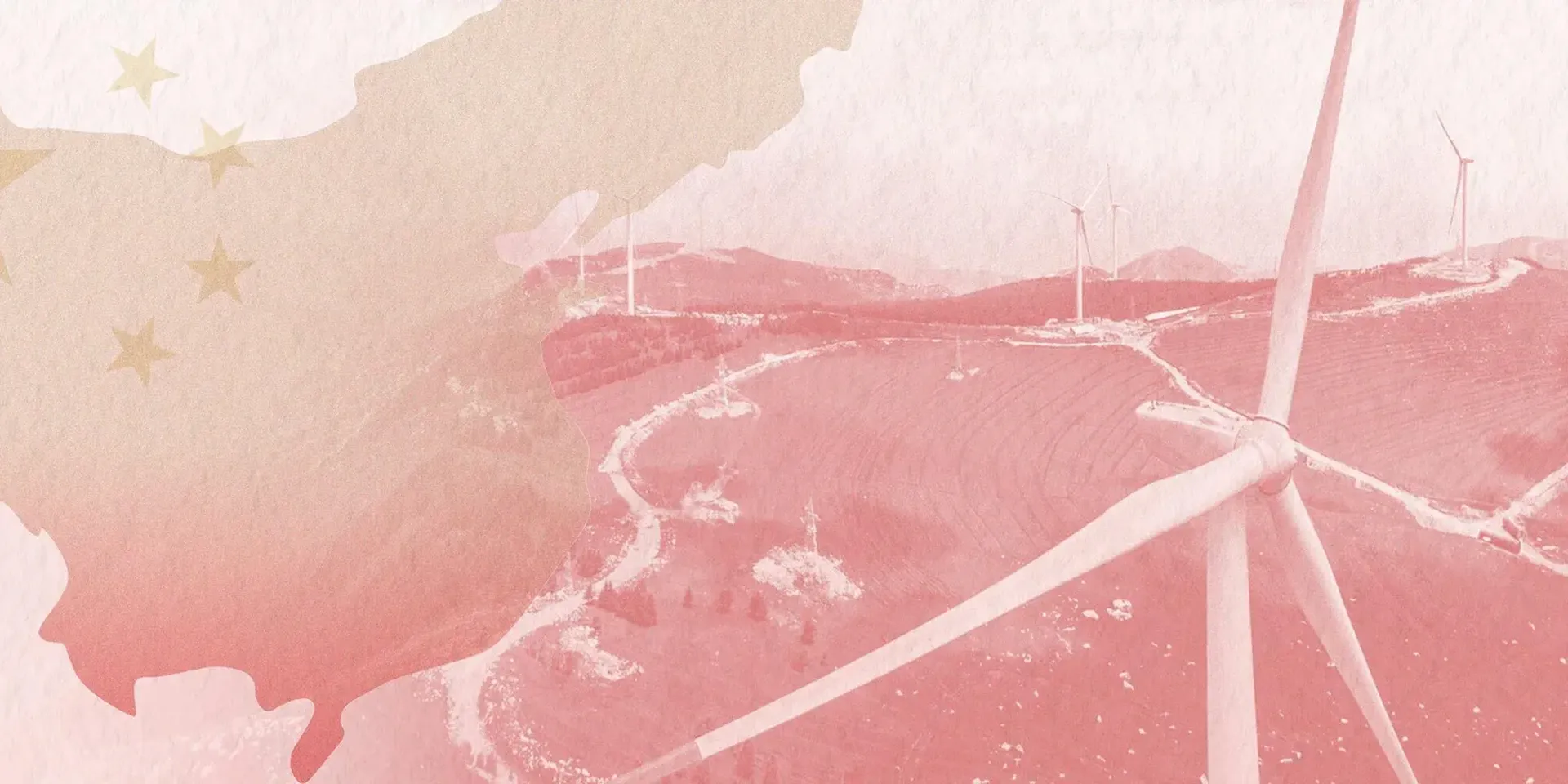
© Justine Corrijn
© Justine Corrijn

‘About fifteen years ago, pollution in China reached such catastrophic levels that it became a matter of social stability,’ says Ma Tianjie, an environmental expert, journalist and author of the book In Search of Green China. He is clear: in order to compete with China, governments in the West will also have to take a more proactive role.
Series: China Talks
The post-war world order is being upended, and China is increasingly positioning itself as an alternative power. Yet, Chinese voices are rarely heard in the mainstream media.
In this series of interviews, MO* journalist John Vandaele seeks out interesting Chinese professionals and academics willing to share their perspectives with MO*. This is episode 2: What are the successes and challenges of China’s environmental and climate policies?
This article was translated from Dutch by kompreno, which provides high-quality, distraction-free journalism in five languages. Partner of the European Press Prize, kompreno curates top stories from 30+ sources across 15 European countries. Join here to support independent journalism.
Ma Tianjie says he has devoted his entire career to environmental issues. Around the turn of the century, many environmental organisations were set up in China, and they often sought volunteers on university campuses. This is how Ma became acquainted with the Chinese environmental movement, which was then very active in the fight against pollution and for the protection of wildlife.
‘After university, I wanted to devote myself to this full-time professionally. I got in touch with Greenpeace, WWF and a number of Chinese environmental NGOs, and eventually Greenpeace gave me my first job. So I worked on environmental issues for about ten years. After that, I went to work for China Dialogue. That is more of an environmental journalism project that reports on environmental issues and legislation.’
All in all, Ma is a Chinese environmental expert who can offer a relatively independent view of Chinese environmental policy. His book describes how environmental activists played a major role in environmental policy up until 2010. I ask him whether my impression is correct that this is now less feasible.
Ma Tianjie: ‘More or less. There has been a shift in the way China wants to tackle environmental problems. From 2000 onwards, the model was one of environmental pluralism. The problem was so huge that people thought: we need everyone, from the national media to NGOs to businesses. But in 2013, the government decided to tackle the problem itself, particularly air pollution in and around Beijing.’
‘Blue skies are becoming a common sight again. Rivers are no longer foul-smelling and black. That is very clear to everyone living here.’
‘The government got better at it. It adopted a much more scientific approach and knew how to encourage companies to adopt greener practices. The top-down approach, with the government steering everything, became the main strategy, whilst the role of the media and NGOs became secondary.’
Does this mean that the latter have to be more cautious?
Ma Tianjie: ‘The media and NGOs have always had to be cautious. But the whole policy approach has changed.’
‘In my book, I describe how photographer Huo Daishan exposed the pollution of the Huai River through his photographs. Ten, fifteen years ago, it was the role of the media and NGOs to act as the eyes of the government. If they noticed pollution on the river, they would call the local environmental authority’s hotline to ask them to take action. Volunteers patrolled the riverbanks constantly.’
‘If you look at the Huai now, there are thousands of state-of-the-art monitoring stations transmitting their data twenty-four hours a day to provincial and national authorities. Today’s Huo Daishans will struggle to find a new polluted spot, because the government knows everything.’
‘Of course, NGOs such as Friends of Nature still play a role. But that is less about detecting pollution and more about bringing legal action against planned projects. In this way, they aim to prevent potentially polluting projects. Their role is now very different, because the state has so much more power and capacity to monitor the environmental situation. They need to find a new role.’
Blue skies, polluted soil
Is the current approach working? I mean: how would you describe the environmental situation in China?
Ma Tianjie: ‘From the perspective of the individual citizen, there has been a huge improvement. If you look at how the air smells now, what the water looks like… There’s a big difference. Blue skies are becoming increasingly common. Rivers are no longer stinking and black. That’s very clear to everyone who lives here.’
‘But if you dig deeper, that doesn’t mean all environmental problems have been solved. Climate change, greenhouse gases… That’s still something we’re struggling with. Businesses need electricity, and that’s often produced using coal. It looks as though we’ll have reached the peak by 2025, but we’ll have to wait and see if this is confirmed in 2026. That remains a major problem.’
‘There is also the legacy of many environmental problems from the past. Particularly in central China, where there was and still is a lot of mining. This involves severely contaminated land. It requires a great deal of capital and technology to resolve that.’
Do you think the government wants to solve these environmental problems?
Ma Tianjie: ‘They will have to, because much of that land is among the most fertile areas in China. If you want to produce food there, you have to tackle that pollution. In recent years, we have already seen significant investment in this. Housing also requires tackling this problem: you cannot build new neighbourhoods on contaminated land, because that will lead to health problems.’
‘Society is trying to tackle the environmental problems resulting from decades of economic growth. That will take more than a few years.’
Why has the Chinese state started to tackle environmental problems? In your book, you write that President Xi Jinping showed an interest in the environment from an early stage.
Ma Tianjie: ‘The main driver behind greening the Chinese growth model is the damage caused by pollution. If you look at the costs China incurred in the early years of this century, the level of pollution, the health problems…’
China Talks #1: political philosophy lecturer Bai Tongdong
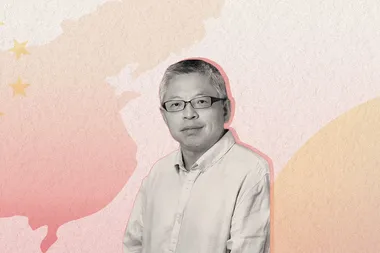
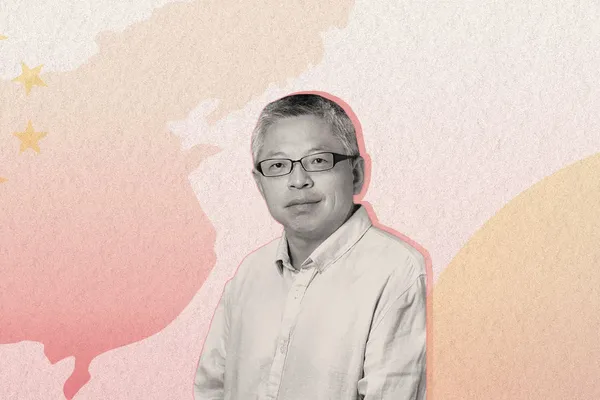
China Talks #1: lecturer in political philosophy Bai Tongdong
‘Around 2011, widespread air pollution reached such catastrophic levels that it became a matter of social stability, something that is always of great importance to the Party. Due to the number of environmental protests on the streets of China or the mass discontent on the internet, the leaders realised they could not hide this problem or delay tackling it. That was the main motive for the new approach.’
‘The second driving force is that the central government saw tackling environmental problems as an opportunity. They realised that by setting very strict environmental standards, they could actually make industry more competitive. They had to develop clean technologies, and those technologies became something China could sell globally.’
‘This was most evident in some of the major industries in which China is now very strong, such as electric vehicles, solar panels, batteries and wind turbines. These were designated as strategically important industries around 2010. That was the moment when China really tried to work out what we needed to focus on if we wanted to develop in a “cleaner” way.’
‘De-industrialisation was never an option, because industry is too important a contributor to growth. So the question was: if you don’t want to focus on dirty steel or cement factories, what should you focus on instead? That’s how we arrived at ten emerging industries of the future.’
Is that the famous ‘Made in China 2025’?
Ma Tianjie: ‘No, this came even earlier. The decision to industrialise China further but in a cleaner way was made in 2010, following the Copenhagen Climate Summit. It was a choice to industrialise China further, but in a cleaner way.’
‘The government has pumped huge sums into those industries: through subsidies, incentives, investment in research and development, and by creating demand by obliging local authorities to purchase those green products at an early stage. By creating such favourable conditions, those investments have paid for themselves fifteen years later. Because these are precisely the industries in which China is strongest.’
‘Green growth’
It is impressive how quickly China became a world leader in these sectors. In the West, it is often claimed that China does not play by the rules of the market and is therefore so competitive.
Ma Tianjie: ‘I think scale is a very significant factor: because the Chinese domestic market is so large, it helps companies to reduce their costs. Fundamentally, it is mainly the domestic market that matters.’
‘Take solar panels: they really took off after the European Union and the United States imposed import tariffs. When exports of those products really struggled around 2012, the government took measures to ensure that all those products were absorbed by the domestic market. This is how a highly competitive domestic market emerged.’
‘It was only from then on that they became truly aggressive in technology development and cost reduction. Not by competing with European companies, but by competing with one another within China. And once that round of domestic competition was over, the strongest Chinese companies had become global champions, because they had been trained in the Chinese market alongside their peers. That made them so strong that it became difficult for manufacturers from other countries to compete with them.’
China wasn’t a rich country back then. How daring was that policy?
Ma Tianjie: ‘In a way, China was forced into this because the EU was hindering exports. To save all those companies, the government came up with a plan to help them domestically by encouraging the large-scale installation of solar panels or wind turbines. That’s how they became competitive.’
I mean: the state could also have opted for more coal. Or did the Chinese cultural tradition, which strives for harmony with nature, play a part? And what role did President Xi play?
Ma Tianjie: ‘The cultural element is more like the icing on the cake. You can certainly wrap the green approach in a layer of traditional Chinese culture, but the two factors mentioned were fundamental.’
‘Xi does have a personal commitment to green issues. Around 2000, he was governor of Fujian and Zhejiang, two provinces that were at the forefront of environmental policy and finding a new way to grow. That left a certain impression on him. He has always championed the idea of green growth, whether in his writings, speeches or policy.’
Environmental damage in figures
Pan Yue, a senior official at the Ministry of the Environment, proposed Green GDP in 2004, a green version of gross domestic product (GDP) that took into account the value of environmental damage. This showed that China had barely any growth once environmental damage was factored out. That was a stark revelation. That instrument has since been phased out.
Ma Tianjie: ‘Green GDP is no longer used as Pan had originally planned, but today they are trying to do something similar but under a different name. Within the government, there is a whole movement towards “ecological accounting”: this aims to calculate how many natural resources China still has and how many it has used. By expressing that in figures, they can hold local leaders accountable for their actions.’
‘This is really happening right now. Visionaries like Pan Yue have played a pioneering role in this. They popularised the idea of the environment as a kind of national treasure: China has all kinds of valuable natural resources, and we must not squander them for short-term economic gains. If you want China to remain a strong civilisation for hundreds of years to come, you need those strategic natural resources. You have to treat them more carefully.’
‘That kind of civilisational perspective became a fundamental driving force for thinkers like Pan or even for President Xi. We must become better stewards of our natural resources, because that makes China stronger.’
Xi put it as follows: ‘The Green Mountain can create mountains of gold, whilst mountains of gold cannot create green mountains.’
Ma Tianjie: ‘Indeed.’
China wants to be the ‘next generation’
Chinese five-year plans now determine how much water can be consumed.
Ma Tianjie: ‘Those are the ecological red lines that draw all sorts of boundaries around China’s natural resources: water, forests, ores… They want to manage them as strategic resources and use them in the long term, rather than squandering them for short-term growth.’
Is that a shift towards a different economic model?
Ma Tianjie: ‘I hope so. China is trying to figure that out, but hasn’t found the answer yet. It’s the start of rethinking how you manage those national resources as inputs for your economy and how you think about economic growth.’
‘In recent years, it has been accepted that lower economic growth can go hand in hand with a better quality of life. That is already a major shift compared to ten years ago, when growth of more than ten per cent was almost an obligation for the country.’
Xi introduced the term ‘ecological civilisation’. Does that have any real meaning?
Ma Tianjie: ‘Leaders such as Pan or Xi view this issue as a civilisational challenge. They are not thinking in terms of ten years, but of a hundred or even a thousand years. How do I ensure that what I do now has a positive impact on the future of Chinese civilisation? That is why they use that term.’
‘If you look at it that way, you’re seeking a system that ensures those resources are utilised in a strategic and wise manner, so that future generations of Chinese people still have them to remain strong and competitive as a nation. There’s certainly a nationalistic element to that.’
‘A very comprehensive system is needed to protect those resources. Some places are simply off-limits: you cannot use them to build roads or carry out projects for today’s needs. They are being preserved for the future. Ecological red lines must keep those resources in a healthy state.’
‘In addition, there is such a thing as green competitiveness. They have imposed a kind of green obligation on the development model, and that is intended to sustain China’s competitiveness in the long term. It must become a green civilisation that transcends industrial civilisation, which they believe the West was good at. China wants to be the next generation and show the way to the next paradigm.’
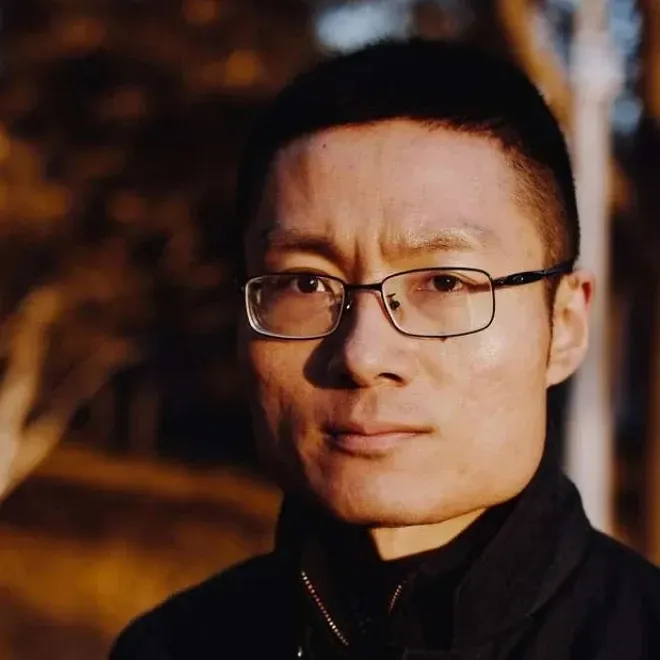
Ma Tianjie: ‘The battle hasn’t been won yet. Currently, 25% of electricity comes from renewable energy sources. Raising that to 80% requires significant modernization of the power grid. And that hasn’t been sorted out yet; it’s still a work in progress.’
© Ma Tianjie
Benefits for other countries
With all its affordable clean technology, China has an enormously powerful tool at its disposal to help most other countries, the Global South in particular, to achieve this. Yet China remains relatively quiet on this subject.
Ma Tianjie: ‘You’re right. Especially over the past two or three years, it has been risky to talk too much about this, even though China intends to export its green technology or solutions to the rest of the world. China realises that countries do not want to become too dependent.’
‘Developing countries want to tackle the climate problem effectively. They want affordable green technology, but they also want to develop their own industry rather than just buying from China. Financially, many developing countries have also been struggling since the pandemic. Always importing only foreign products, even if they are green, is a legitimate concern.’
‘Chinese policymakers are certainly willing to discuss a mutually beneficial solution, rather than simply losing access to key markets.
‘Can China help them build their own green industry, rather than just selling? Can China help Indonesia to build more electric vehicles itself? And how do you balance that with the desire of Chinese car manufacturers to sell cars there?’
‘How do you share the profits and benefits? Even the EU is now asking not just for Chinese electric vehicles to be exported to it, but also for electric vehicles to be built jointly.’
The Europeans could copy China, which from the 1990s onwards required Western companies to set up joint ventures with Chinese firms. Through those partnerships, they were able to learn for themselves.
Ma Tianjie: ‘Exactly. That will be the next big debate: even though China has all the necessary products, it cannot simply dump everything everywhere. You have to find solutions that also offer benefits to others.’
In Europe
American multinationals built factories in Europe after 1945. Would China want to follow the same path?
Ma Tianjie: ‘Certainly. If you look at how China is handling the trade war over electric vehicles...’
‘The US took a very drastic stance: no imports of Chinese electric vehicles. The EU wants to negotiate further and seek a common approach. It wants China not to set prices too low, in order to protect European manufacturers to some extent. On the other hand, the EU is willing to accept some Chinese electric vehicles in exchange for a transfer of technology.’
‘Something is in the works. Perhaps they will come up with a solution that benefits both sides. Chinese policymakers are quite willing to talk if the alternative is that they would lose access to those important markets.’
Green energy and coal
We discussed the successes of Chinese environmental policy, but there are also downsides. Your book explains how incinerators, through intense lobbying, won out over waste prevention and recycling. As a result, there are now so many incinerators that they do not have enough waste.
Ma Tianjie: ‘Environmental policy is not like a switch that can be flipped in China to turn the green light on at a moment’s notice, even if there is a strong intention on the part of the central government. Many industries that have benefited from the old growth model want to remain part of China’s future.’
‘That is why greenhouse gas emissions are not so easy to reduce. Even though solar and wind power have grown immensely in recent years, coal-fired power stations are still being built today. They claim a new role as a back-up for when there is no wind or sun, as the backbone of the electricity grid. That argument resonates because China has experienced power cuts due to extreme droughts or heatwaves.’
‘They use all sorts of arguments: you need to keep us, we’re stable and local. This kind of debate is taking place across the country. They won’t openly contradict Xi’s green policies, but they’re quietly working against them.’
‘Classic Western environmental policy consists primarily of rules and regulations; China did not take that path because it is still a developing country and cannot afford deindustrialization.’
Does this mean that coal will disappear more slowly?
Ma Tianjie: ‘If you want to reduce greenhouse gas emissions, as the Paris Climate Agreement aims to do, coal-fired power stations should be phased out more quickly. But at the moment, new ones are still being built.’
‘It will be several years before we know how this will turn out. The renewable energy sector has now grown so large that it can also lobby.’
‘In the coming years, we will reach a point of no return, which will require major changes to the electricity grid. That also depends on State Grid (the Chinese state-owned company that manages the electricity grid, ed.). If they are convinced, they will also have to innovate. State Grid has not yet been very proactive in that regard.’
Are you saying the battle isn’t won yet?
Ma Tianjie: ‘Not yet. Currently, 25% of electricity comes from renewable energy sources. Pushing that up to 80% requires major upgrades to the power grid. And that hasn’t been sorted out yet. It’s still a work in progress.’
Greater control over industry
What are the differences between Western and Chinese environmental policy?
Ma Tianjie: ‘The biggest difference is the use of industrial policy. Traditional Western environmental policy consists mainly of rules and laws: you make environmental standards so strict that production becomes cleaner, and that some industries even move to other countries. China has not taken that route because it is still a developing country and cannot afford de-industrialisation. It came up with something different.’
‘Of course, Chinese leaders are also tightening standards, but they are also encouraging industry to operate differently. The state plays a major role in this. Western governments have so far played little or no part in this, until they perhaps now realise that industrial policy is a necessity if they want to compete with China.’
How ‘clean’ will China become?
Ma Tianjie: ‘Hard to say. It also depends on what you mean by clean. I’m fairly certain that China can combine economic prosperity with a decent environmental standard. I can’t predict the end result because so much is changing.’
‘AI is already complicating electricity consumption models. Three years ago, we thought electricity consumption would peak; now we think it might still skyrocket. How do you tackle that? Nobody knows.’
‘The promise of sensible environmental policy is still there, but the future is unpredictable? Partly because the geopolitical situation is so uncertain.’
This article was originally published in Dutch on may 15th. It was translated from Dutch by kompreno, which provides high-quality, distraction-free journalism in five languages. Partner of the European Press Prize, kompreno curates top stories from 30+ sources across 15 European countries. Join here to support independent journalism.
The translation is AI-assisted. The original article remains the final version. Despite our efforts to ensure accuracy, some nuances of the original text may not be fully reproduced.
If you are proMO*...
Most of our work is published in Dutch, as a proMO* you will receive mainly Dutch content. That said we are constantly working to improve our translated work. You are always welcome to support us both as a proMO* or by supporting us with a donation. Want to know more? Contact us at promo@mo.be.
You help us grow and ensure that we can spread all our stories for free. You receive MO*Magazine and extra editions four times a year.
You are welcome at our events free of charge and have a chance to win free tickets for concerts, films, festivals and exhibitions.
You can enter into a dialogue with our journalists via a separate Facebook group.
Every month you receive a newsletter with a look behind the scenes.
You follow the authors and topics that interest you and you can keep the best articles for later.
Per month
€4,60
Pay monthly through domiciliation.
Meest gekozen
Per year
€60
Pay annually through domiciliation.
For a year
€65
Pay for one year.
Are you already proMO*
Then log in here