Europe has the most progressive legislation worldwide, but still falls short
Investigative journalist Isabelle Vanhoutte: ‘There is no good solution to the plastic problem’
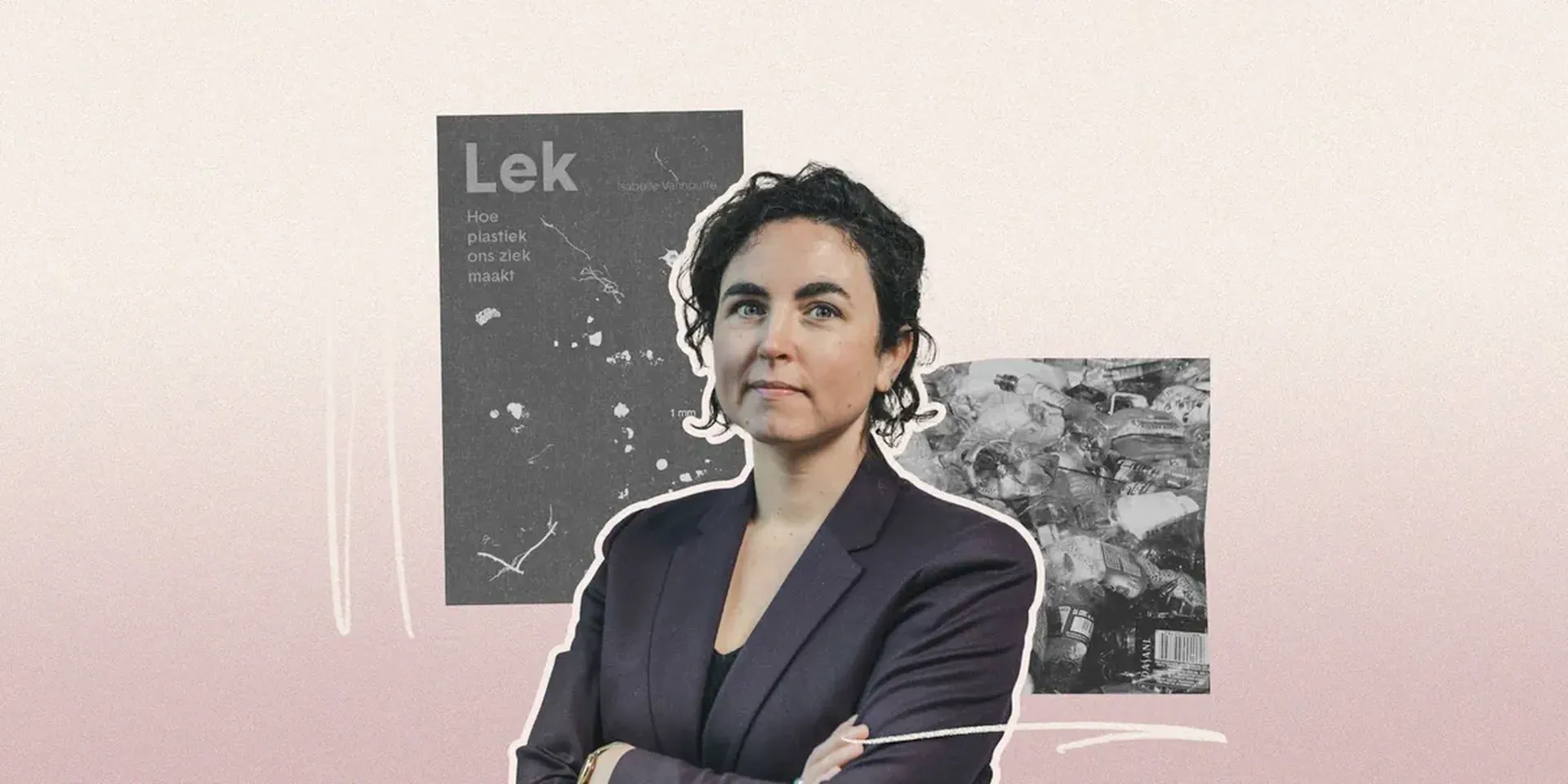
© Wim Vanlee
© Wim Vanlee
Daan Souts
20 August 2026 • 13 minutes reading time
In her book Lek (Leak), investigative journalist Isabelle Vanhoutte shows how plastic enters our bodies even before we are born. She also reveals how demand for plastic is being artificially propped up. She therefore calls for a new balance between use, risks and responsibility, on the part of both manufacturers and the government. ‘Manufacturers must demonstrate that their additives are non-toxic, just as they do with medicines.’
From clothing to packaging, plastic is indispensable in our daily lives. It contains chemicals that end up in our bodies and the environment, and it does not decompose but breaks down into micro- and nanoplastics.
For investigative journalist Isabelle Vanhoutte, this suddenly became very real in 2013. One of her twin babies ended up in the neonatal unit following an emergency caesarean section and was fed through plastic tubes and feeding tubes. ‘I started to wonder whether all this was actually good for my child?’
Years later, when she began writing about plastic and recycling as an investigative journalist, she was able to put into words what she had already vaguely suspected at the time. For example, that cola cans – she had had a huge craving for cola during her pregnancy – contained BPA (bisphenol A), now a banned plasticiser.
‘I suddenly realised that I had unwittingly exposed my child to harmful substances. In that way, my motherhood is interwoven into the book.’
What struck you most during your research?
Isabelle Vanhoutte: ‘I started this book as a book about waste, something we as a society prefer to keep out of sight. But the question is where it goes. I interviewed people about the destination of our plastic waste and tracked waste streams using trackers. Because waste is, par excellence, an international commodity.’
‘During my research, I kept asking manufacturers and recycling companies the same question: “What happens if there is a banned substance in plastic, and who checks for that?” The answer was invariably: “We replace that substance.” But I never received a clear answer as to which substance was used as a replacement, or whether it had been sufficiently tested.’
‘New chemicals come onto the market every day, whilst the process of banning harmful substances is painfully slow. “We’ll replace it” sounds reassuring, but masks a system in which nobody has a clear overview anymore.’
We know too little
In your book, you write that there are thousands of chemicals in plastic, but that we know very little about most of them. What evidence is there for that?
Isabelle Vanhoutte: ‘Two leading and groundbreaking reports from 2024 have breathed new life into the plastics debate. The PlastChem report found that there are around 16,000 chemicals present in and around plastic. For more than 10,000 of these, basic information on potential hazards is lacking, and over 4,200 were classified as of concern.’
‘The Plastic Health Umbrella Review then collated thousands of scientific studies and concluded that chemicals in plastic are harmful at virtually every stage of life. Those reports, together with the evasive answers I received during my research, ultimately formed the basis of my book.’
Is our knowledge of plastic really that poor?
Isabelle Vanhoutte: ‘Unfortunately, yes. The worrying thing is that those 16,000 substances are only the ones with a so-called CAS number, an international identification code. So there are probably even more compounds that aren’t being accounted for.’
‘Furthermore, there is considerable uncertainty regarding mixture toxicity. What happens when chemicals in plastic react with one another in waste streams or during recycling, and subsequently end up in our bodies? Exactly how these substances interact with one another remains largely unknown, although we do see on a small scale that some mixtures can be even more harmful than the individual substances.’
‘Furthermore, there is a consensus within the scientific community that recycled plastics can be more harmful than new plastic. For instance, old flame retardants – substances that have long been on banned lists – have been found in black plastic, such as sushi trays, toys and kitchenware. How they end up there is unclear. There are hypotheses that they end up in European plastics through the mixed recycling of plastics from old electronics, but there is no certainty about this.’
Today, we can no longer imagine life without plastic; it is everywhere. Do you find that worrying?
Isabelle Vanhoutte: ‘Yes, and more and more plastic is being added. In 1950, 2 million tonnes of plastic were produced worldwide, or 0.8 kg per person. Today, that figure stands at 450 million tonnes, which equates to around 56 kg per person. Studies of the brains of deceased individuals have also shown that the amount of plastic found in them has increased significantly between 2015 and 2025.’
‘Plastic is also a lifeline for the oil industry. The energy transition is costing it money, so the stakes in new plastic production are enormous. Moreover, plastic does not degrade and the harmful substances it contains continue to circulate. Problems are piling up, and it’s getting worse by the day.’
You were worried during your pregnancy. How harmful are those substances to newborn babies in the neonatal unit?
Isabelle Vanhoutte: ‘I discussed this with Professor Philippe Jorens, who is researching the effects of plasticisers on plastic tubes. He discovered that these plasticisers leach out and are found in patients’ blood. Jorens also studied children in intensive care, where the same tubes are used as in the neonatal unit. There, he found that those who were connected to those tubes the most scored 20 to 30% lower on cognitive tests than a control group. Those children had also been very ill, so the link isn’t watertight. But it’s a warning sign, confirmed by other studies.’
Refresher certificate
Is there no European legislation to curb this problem?
Isabelle Vanhoutte: ‘In Europe, we have the REACH Regulation, the most progressive regulation in the world. It places the responsibility on manufacturers through a registration requirement, whereby basic data such as hazard properties must be provided. But that obligation only applies to chemical substances that are placed on the market as individual substances. Moreover, polymers, the basis of most plastics, are exempt from registration. In practice, therefore, the regulation falls short.’
‘An additional problem is regrettable substitution, whereby a harmful chemical is replaced by a very similar variant that is equally, or sometimes even more, harmful. Following the ban on BPA, for example, the industry switched to BPS and BPF. On average, these substances are given free rein for ten years before being banned, after which the same cycle repeats itself.’
If REACH is the most progressive regulation in the world, what is the situation in countries outside the EU?
Isabelle Vanhoutte: ‘Not much better. Take DEHP, for example, another plasticiser that makes plastics flexible. Globally, one in eight deaths from cardiovascular disease among people aged 55 to 64 is linked to this substance. In countries with poor waste management, such as China and India, this effect is even greater.’
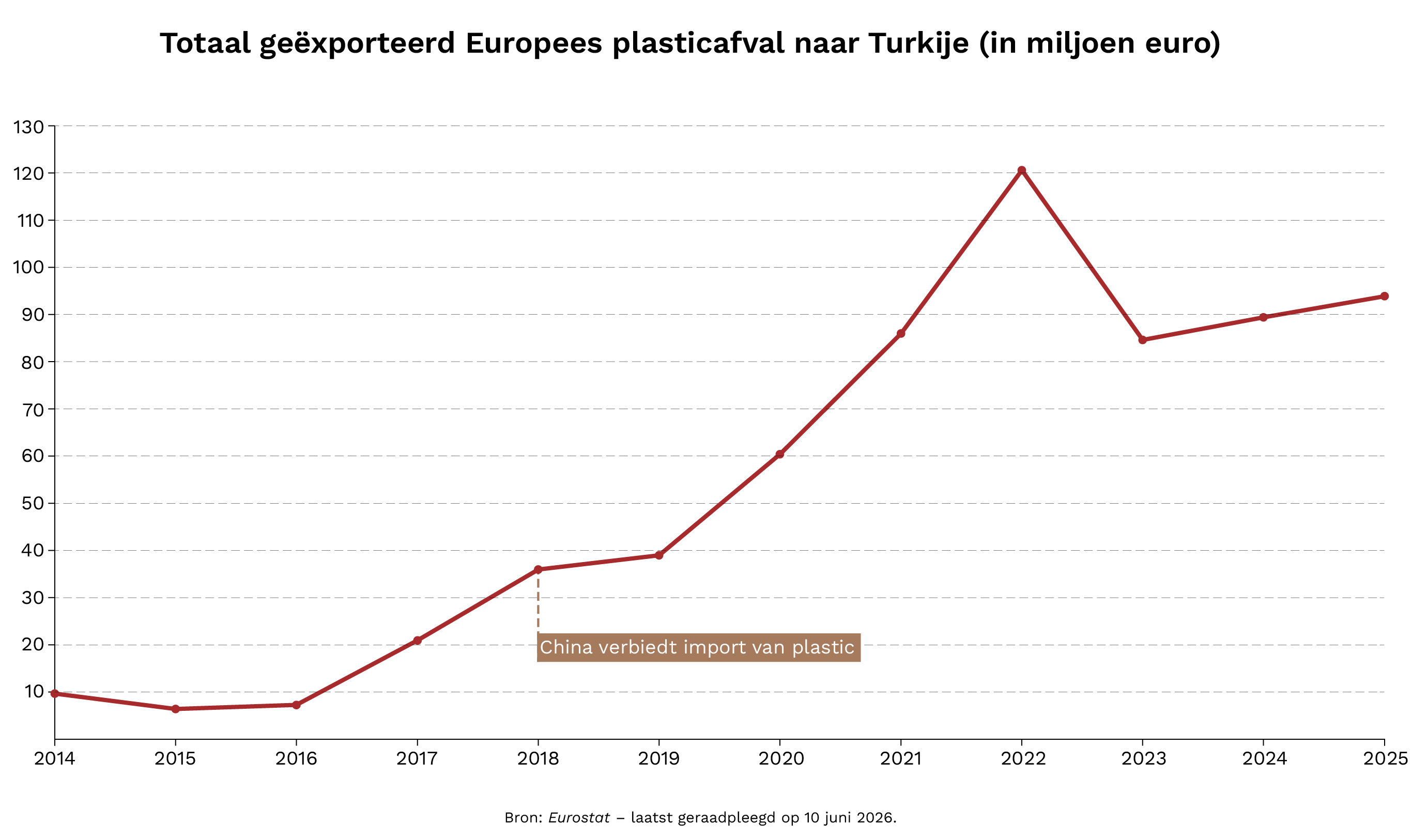
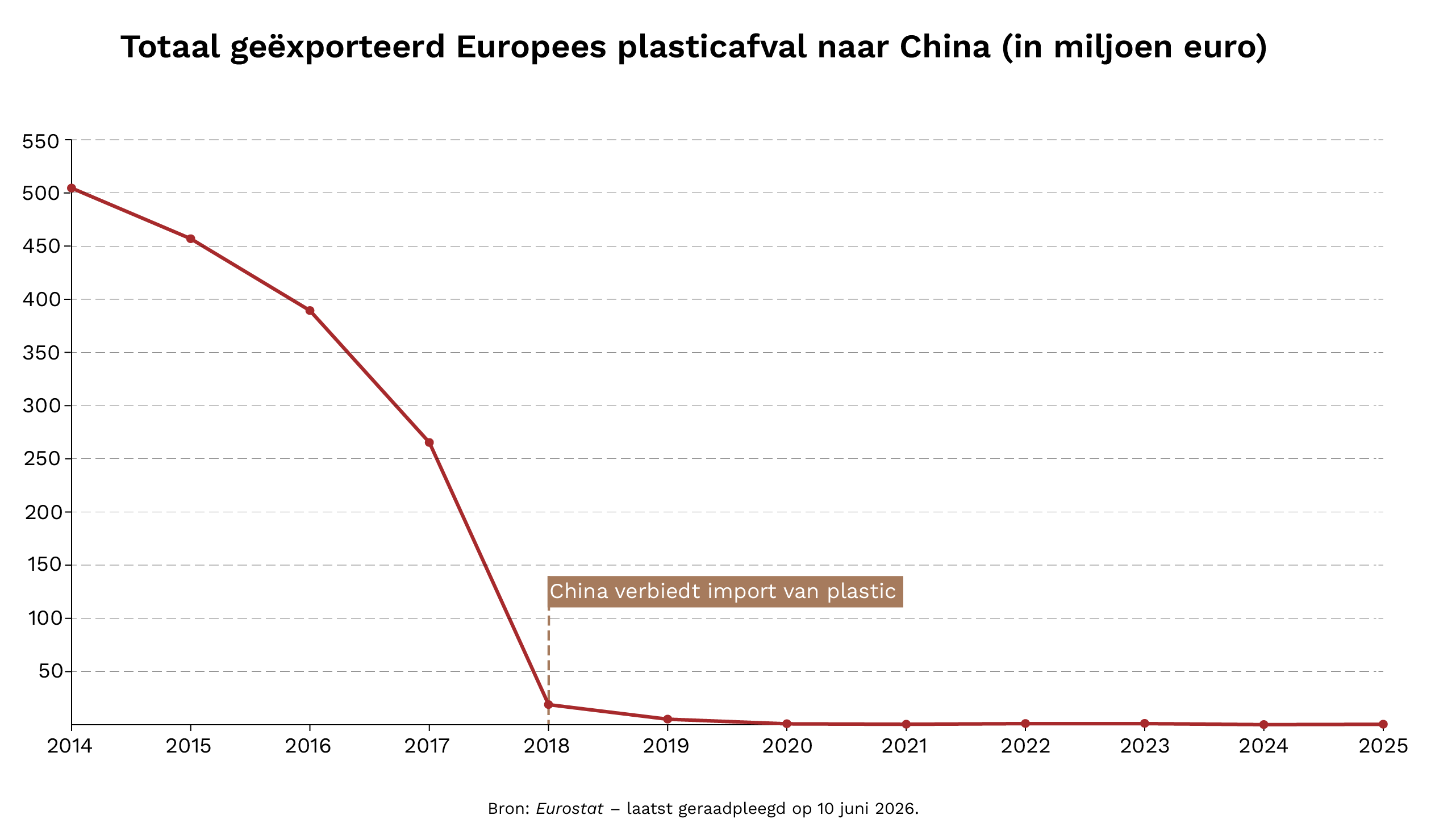
‘In Europe, we talk endlessly about recycling, put plastic in the blue bin and think we’re doing the right thing. But in practice, the vast majority of industrial plastics are “recycled” on the other side of the world, particularly in Turkey, to which we export a large proportion of our plastic waste.’
What are the consequences of this export for Turkey?
Isabelle Vanhoutte: ‘There is a clear link between large-scale plastic imports and crime. Turkey has less stringent legislation than the EU and is plagued by widespread waste-related crime. After all, recycling plastic is not profitable. It requires a lot of manpower and energy, and the production processes are complex. That is why recycling companies are paid to take over that process.’
‘If a Belgian company sends its waste to a Turkish recycling company, it pays for it and receives a proper recycling certificate. But is that plastic actually recycled? Possibly not. In practice, all too often it is simply burned, illegally, in open fires, without industrial filters. The toxic substances in plastic do not simply vanish into smoke, but fall to the ground as toxic ash or are released back into the environment via the air. And due to a severe lack of oversight, this largely goes unpunished.’
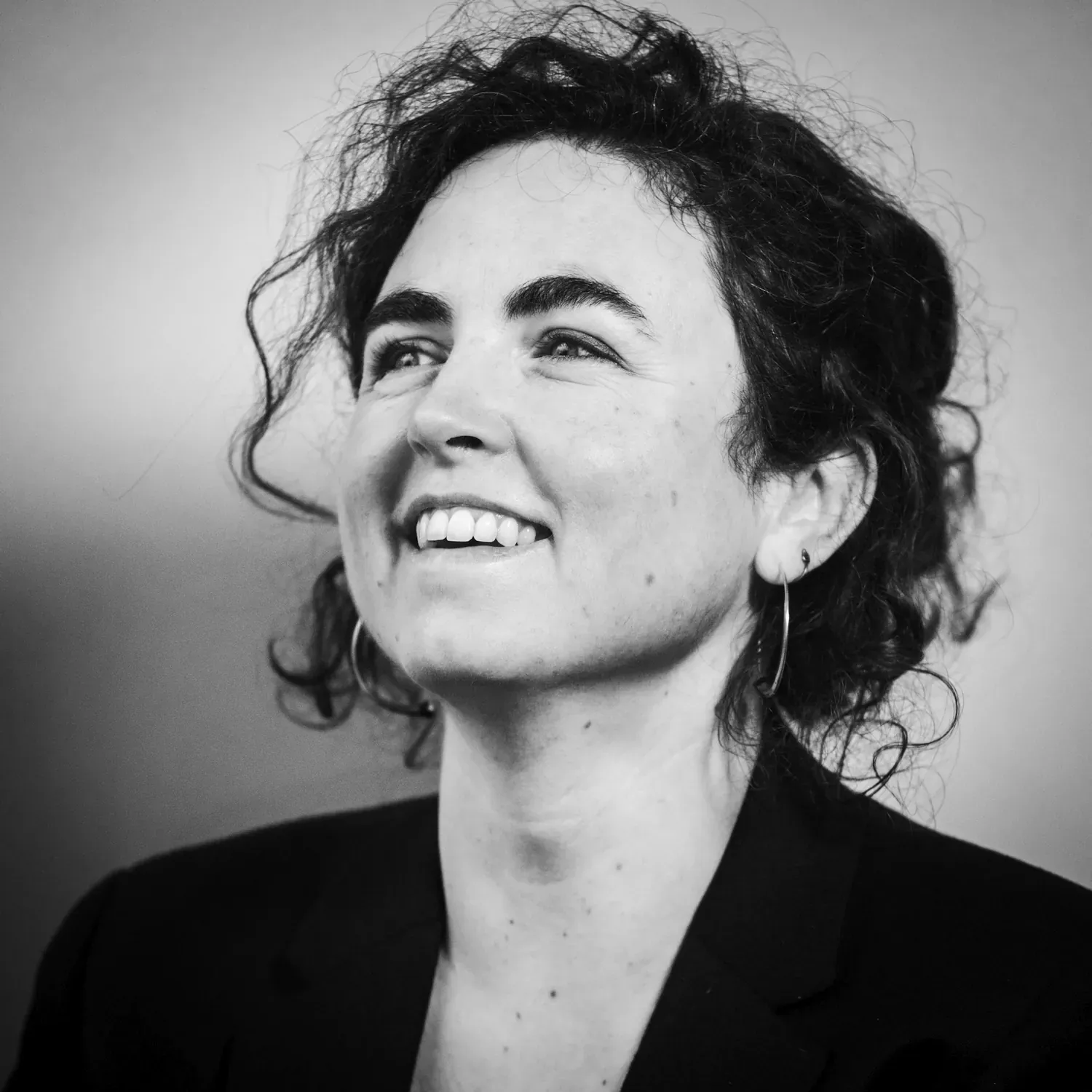
Isabelle Vanhoutte
© Wim Vanlee
Good marketing
What is the impact of plastic on the environment?
Isabelle Vanhoutte: ‘There is a leading study that concluded that microplastics reduced global yields of wheat, rice and maize by 4 to 14% because they disrupt all kinds of natural processes in the soil. Microplastics are filtered out by wastewater treatment plants, but nanoplastics are not. They are simply too small and can therefore spread easily without hindrance. They are actually tiny chemical carriers from which those 16,000 substances leach out.’
And the impact on animals?
Isabelle Vanhoutte: ‘The coho salmon is a good example. The fish is born in a freshwater river, migrates to the sea after a year to grow, and returns to that same river after one to three years to spawn, after which it dies. Back in the 1990s, scientists noticed that coho salmon were not returning to their birthplace, but were mysteriously dying in urban streams, often following heavy rainfall. Wastewater was tested for known toxic substances, but it was not until 2020 that 6PPD was identified. This is a substance released by tyre wear and has been found to be extremely toxic to coho salmon.’
Various plastic manufacturers and the petrochemical industry have set up several organisations to combat plastic pollution, often with grandiose names such as the Alliance to End Plastic Waste. Do these organisations actually offer any help?
Isabelle Vanhoutte: ‘Yes, but mainly in terms of marketing. Between 2019 and 2023, the Alliance to End Plastic Waste cleared away around 119,000 tonnes of plastic, whilst its five largest members produced 132 million tonnes during the same period – a factor of more than 1,100. That contrasts sharply with their public image.’
‘Recycling also fits into that policy. In practice, only 9 to 10% of plastic is actually recycled. A large proportion is downcycled and given a second life as inferior material, after which it still ends up in the environment or is incinerated. Yet virtually every piece of packaging states that it can be recycled, even though that process is expensive and complex. In this way, the industry creates public support for new plastic production. And it needs that narrative.’
‘But initiatives such as Mooimakers – a collaboration between Fost Plus, funded by the industry, and OVAM, the Flemish government agency for waste policy – also mainly tell appealing marketing stories and encourage citizens to clear up their waste, whilst producers themselves do not stop producing. Plastic companies are very successful at masking their own role and framing Mooimakers as an organisation with a heart for society.’
A total ban is an illusion
If we can barely recycle plastic, and downcycling is not an option, nor is incineration, what on earth are we supposed to do with that stuff?
Isabelle Vanhoutte: ‘There is no good solution. We can, however, reduce consumption. A good example comes from the Erasmus MC hospital in Rotterdam. During an intensive care admission, around 12 metres of plastic tubing was used every day. To reduce that mountain of waste, the hospital switched to paracetamol in tablet form wherever possible. This avoids needles, medicine bags and metres of tubing. That yields quick gains, both in waste reduction and in exposure to harmful substances. ‘If we adopt a more conscious, broader approach, we can more often opt for alternatives that use less plastic.’
Do you have confidence that your children’s children will be able to live plastic-free lives?
Isabelle Vanhoutte: ‘No, do you? (laughs) Plastic is kept artificially cheap because the real costs – such as risk assessments, long-term health damage and waste disposal – aren’t factored into the price. At the same time, we shouldn’t completely condemn it. In many applications, it’s a useful product, and in a medical context, it can even be life-saving. A total ban on plastic is an illusion. Manufacturers must, however, take responsibility and demonstrate that their additives are non-toxic, as is the case with medicines. That would make plastic more expensive. That is why we must learn to live with plastic again and give it a balanced place in society.’
This article was published first in Dutch on june 13th
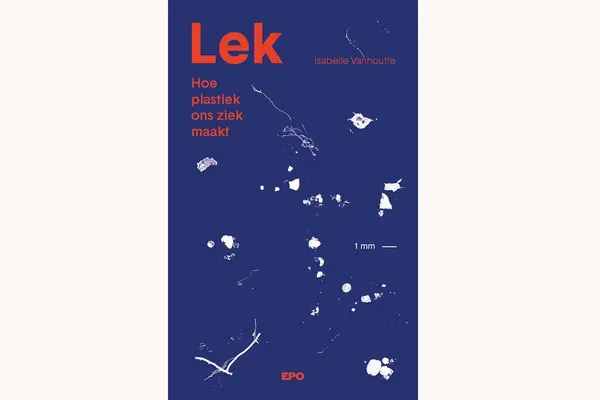
Lek, hoe plastiek ons ziek maakt (Leak, How Plastic Makes Us Sick) by Isabelle Vanhoutte, is publicated by EPO. 176 p. ISBN 978 94 626 7608 4
This article was translated from Dutch by kompreno, which provides high-quality, distraction-free journalism in five languages. Partner of the European Press Prize, kompreno curates top stories from 30+ sources across 15 European countries. Join here to support independent journalism.
The translation is AI-assisted. The original article remains the final version. Despite our efforts to ensure accuracy, some nuances of the original text may not be fully reproduced.
If you are proMO*...
Most of our work is published in Dutch, as a proMO* you will receive mainly Dutch content. That said we are constantly working to improve our translated work. You are always welcome to support us both as a proMO* or by supporting us with a donation. Want to know more? Contact us at promo@mo.be.
You help us grow and ensure that we can spread all our stories for free. You receive MO*Magazine and extra editions four times a year.
You are welcome at our events free of charge and have a chance to win free tickets for concerts, films, festivals and exhibitions.
You can enter into a dialogue with our journalists via a separate Facebook group.
Every month you receive a newsletter with a look behind the scenes.
You follow the authors and topics that interest you and you can keep the best articles for later.
Per month
€4,60
Pay monthly through domiciliation.
Meest gekozen
Per year
€60
Pay annually through domiciliation.
For a year
€65
Pay for one year.
Are you already proMO*
Then log in here